2026 Dodge Demon : The 2026 Dodge Demon isn’t just another special‑edition muscle car; it feels like a statement from Dodge that the era of big‑block V8 excess isn’t over yet.
With the global auto industry shifting toward EVs and stricter emissions, Dodge has doubled down on raw, supercharged power, bringing the Demon name back for a fresh run at the quarter‑mile and at petrol‑head dreams worldwide.
Enthusiasts in India, who have long watched these machines from the sidelines, are now seeing the Demon treated as a modern icon more than just a drag‑strip gadget.
What’s Under the Hood?
At the core of the 2026 Dodge Demon sits a supercharged 6.2‑litre HEMI V8, tuned to push outputs comfortably past the 900‑horsepower mark in some trims, depending on fuel and tuning.
With torque somewhere in the mid‑900s lb‑ft range, the car can sprint from 0–60 mph in under three seconds, and in heavily‑tuned configurations that brush the 1,000‑hp barrier, the same sprint can dip deep into the low‑2‑second bracket.
It’s still rear‑wheel drive, with an 8‑speed automatic performance transmission that’s been stiffened for brutal launches and repeated hard shifts.
Engineers have also tweaked cooling, intake plumbing, and calibration so the Demon can run multiple back‑to‑back launches without overheating, something earlier Drag‑Pak‑style cars often struggled with.
The result is a muscle‑car package that feels built for real track days, not just one‑off drag‑strip runs.
Exterior: Aggressive but Sharper
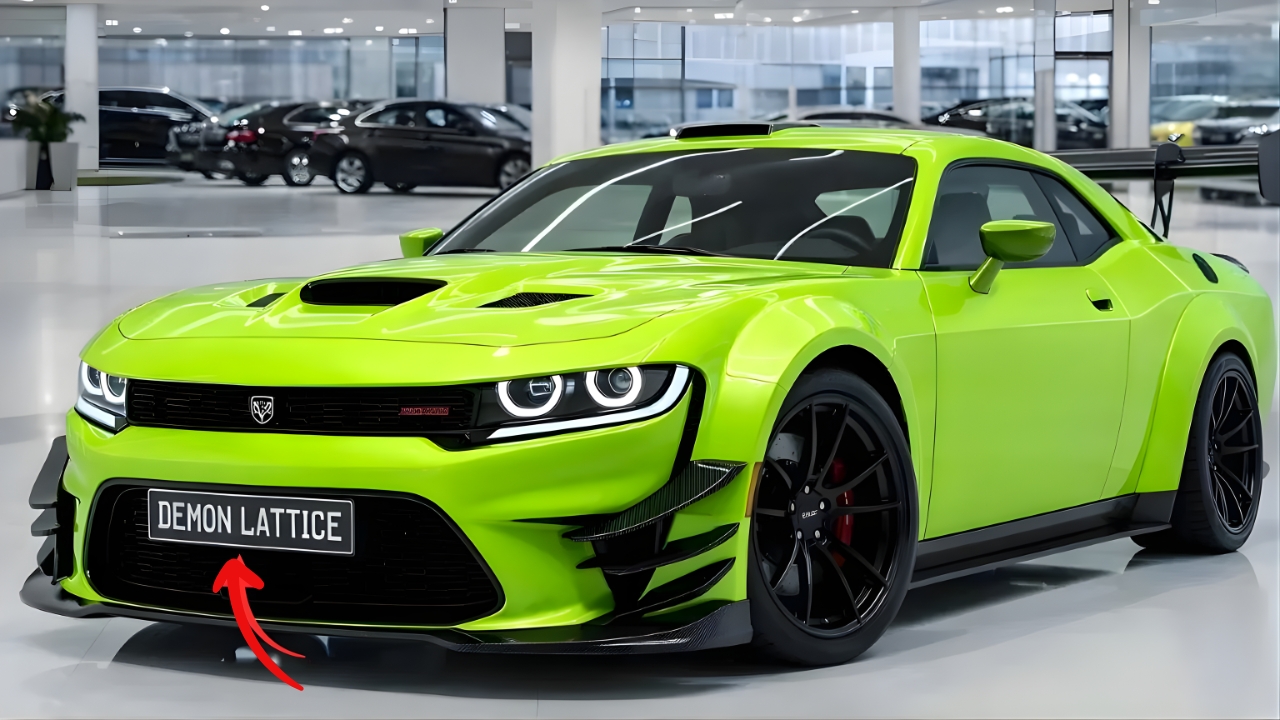
Externally, the 2026 Dodge Demon keeps the classic Challenger silhouette but adds a more aggressive, purpose‑built look that telegraphs its intent.
Also Read: 2026 Honda Civic powerful 780HP engine, mileage is 35KMpl at low cost price
The widebody stance, flared fenders, and aggressive splitter give the car a planted, squat profile that says “drag strip” rather than “cruiser.”
Gloss‑black or matte‑black panels, functional hood scoops, and Demon‑specific badging help distinguish it from regular SRT‑tuned Challengers.
The lighting has also been updated with slimmer LED strips at the front and rear, giving the Demon a more modern, tech‑forward face while still clinging to its retro muscle‑car roots.
Aerodynamic tweaks like vented fenders, a rear diffuser, and optional rear wings help manage airflow at high speeds, even though the car’s primary playground is still the straight‑line quarter‑mile.
Inside the Cabin: Race‑Ready, Not Just Retro
Step inside the 2026 Dodge Demon and you’ll find a cockpit that’s part drag‑strip instrument panel, part everyday‑usable cabin.
The center stack is dominated by a modern digital instrument cluster and a large touchscreen infotainment unit, running the latest Uconnect‑style software with navigation, smartphone connectivity, and performance apps.
Drivers can track lap times, 0–60 and 0–100 mph times, and even monitor temperatures and boost pressure right from the screen.
Also Read: Samsung Galaxy S26 Ultra 5G 200MP camera smartphone with 512GB storage, look is fabulous
Seats are bolstered heavily, often with Alcantara or premium leather, designed to hold the driver firmly during hard launches and cornering.
The steering wheel is wrapped in leather or suede, with paddle shifters and quick‑access buttons for drive modes, traction control, and launch settings.
While the cabin still feels a bit busier and less minimalist than some European rivals, it’s exactly the kind of “a bit chaotic, very fast” environment that suits a Demon‑branded car.
Driving Experience: Chaos, Controlled
On the road, the 2026 Dodge Demon is a handful, and that’s exactly the point. In normal‑mode driving, throttle response is eager but manageable, steering is on the heavy side, and the suspension is tuned firm, though not as brutal as a dedicated race car.
Switch into “Track” or “Drag” mode, however, and the car transforms: traction control loosens up, launch control pre‑loads the drivetrain, and the exhaust goes from loud to outright obnoxious.
From a rollout, the combination of sticky tyres, a short final drive ratio, and instant torque from the supercharger can make the front end lift slightly as the car squirms off the line.
On a good strip, the Demon can dip into sub‑9‑second quarter‑mile runs on stock‑spec rubber, which is wild for a car that’s still technically street‑legal.
Safety, Tech, and Practicality
Despite its wild performance, Dodge hasn’t entirely ignored safety and modern expectations. The car carries electronic stability control with multiple modes, strong Brembo‑style brakes, and modern driver‑assistance features such as forward‑collision warning, lane‑keeping aids, and blind‑spot monitoring in higher trims.
Also Read: Volkswagen Virtus 2026 New premium design sedan comes with 5 star safety rating, boot space is 521L
A rear‑view camera and parking sensors are standard, and some versions even offer a 360‑degree camera setup to help with the Demon’s wide, bulky body in tight city streets.
Inside, drivers benefit from a decently sized trunk, decent legroom for two, and modern creature comforts like dual‑zone climate control, premium audio, and USB charging ports. It’s not as usable as a family‑oriented sedan, but it’s far more daily‑drivable than a pure race‑track special.
India’s Relationship with the Demon 2026 Dodge Demon
As of 2026, the Dodge Challenger SRT line, including the Demon, is still officially absent from India’s showrooms.
Any examples seen on Indian roads are typically privately imported or CBU (completely built‑up) units, which means high‑six‑figure or even low‑seven‑figure rupee prices once duties, registration, and insurance are added.
For Indian enthusiasts, the Demon remains more of a “dream garage” or YouTube‑star car than a realistic daily purchase.
Also Read this – Yamaha RX100 reborn with eligent look, sporty powerful engine with 76 Kmpl mileage, price is very low
Still, the 2026 Dodge Demon’s presence in global media and social channels keeps American muscle alive in the Indian market, feeding a growing appetite for performance cars beyond the usual German or Japanese offerings.
For a petrol‑head audience in cities like Delhi, Mumbai, or even smaller markets such as Panipat, the Demon is less about practicality and more about raw emotion, sound, and the idea of a car that refuses to be tamed.